
In aesthetic medicine, there has been a clear shift away from quick fixes and toward treatments that encourage the skin to repair itself naturally. That is exactly why PRP and PRF have gained so much attention. Both are regenerative treatments created from your own blood, both aim to improve skin quality, and both sound very similar at first glance.
But when you look closer, PRF vs PRP is not just a minor technical difference. The way these treatments behave in the skin, how long they work, and what concerns they address can vary in meaningful ways. Understanding those differences can help you choose a treatment that actually aligns with your skin needs rather than following a trend.
Why Regenerative Treatments Are Different From Traditional Injectables
Unlike fillers, which add volume, or neuromodulators, which relax muscles, PRP and PRF focus on skin repair and regeneration. They use growth factors from your own blood to signal healing, collagen production, and tissue renewal.
Because these treatments work with your body rather than against it, results appear gradually. The payoff is skin that looks healthier, stronger, and more resilient over time rather than artificially altered.
What PRP Really Does in the Skin
PRP, or Platelet-Rich Plasma, is created by spinning a small blood sample at a high speed. This separates platelets and growth factors into a plasma layer that can be injected or applied to the skin.
Once PRP is placed in the treatment area, it releases growth factors fairly quickly. These growth factors stimulate collagen production, improve blood flow, and support skin repair.
PRP is often chosen for people who:
- Want overall skin refreshment
- Have early signs of aging
- Are dealing with dullness or uneven tone
- Want a natural-looking boost without added volume
PRP has been used for years in both medical and aesthetic fields, which makes it a well-established option for regenerative care.
How PRF Changes the Game
PRF, or Platelet-Rich Fibrin, is sometimes described as the next evolution of PRP. While it also comes from your own blood, it is processed differently. The blood is spun at a slower speed and without additives, which preserves more healing components.
What makes PRF unique is the fibrin matrix it creates. Instead of releasing growth factors all at once, PRF releases them slowly over time. This extended release supports longer-lasting regeneration and collagen formation.
PRF is commonly selected for patients who:
- Have visible volume loss
- Want longer-lasting regenerative effects
- Need treatment in delicate areas
- Are addressing more advanced signs of aging
Because of its structure, PRF behaves more like a scaffold in the skin rather than a simple injection.
PRP vs PRF Differences That Actually Matter
Many comparisons focus on technical details, but from a patient perspective, the most important differences are how these treatments perform after injection.
PRP tends to act faster but fades sooner. PRF works more gradually but continues supporting the skin for a longer period.
PRP feels lighter in the skin, while PRF has more body and stability. This is especially important in areas where thin skin or hollowness is a concern.
Neither option is better across the board. The better choice depends on what your skin actually needs.
PRP vs PRF Differences at a Glance
| Feature | PRP | PRF |
|---|---|---|
| Processing speed | High | Low |
| Anticoagulants | Used | Not used |
| Growth factor release | Immediate | Slow and sustained |
| Consistency | Liquid | Gel-like |
| Longevity | Shorter | Longer |
| Best for | General rejuvenation | Volume and delicate areas |
PRF vs PRP Under Eyes: A Closer Look
The under-eye area is one of the most challenging areas to treat. The skin is thin, delicate, and prone to hollowing and discoloration.
PRP under the eyes is often used to improve:
- Dark circles
- Thin or crepey skin
- Overall brightness
PRF under the eyes is frequently preferred when volume loss is present. Because PRF stays in place longer and releases growth factors slowly, it can provide:
- Better support for hollow tear troughs
- Improved skin thickness over time
- More durable results
For patients concerned about both skin quality and structure, PRF may offer an advantage in this area.
PRF vs PRP for Face Rejuvenation
When used across the face, both treatments aim to improve skin health rather than change facial shape.
PRP is well-suited for maintenance treatments and early aging concerns. It helps improve glow, texture, and tone without downtime or heaviness.
PRF is often chosen for more noticeable aging, especially when the face has lost firmness or fullness. Its slow-release nature supports deeper collagen remodeling.
Some treatment plans even alternate PRP and PRF sessions depending on seasonal skin needs and aging patterns.
Microneedling With PRF vs PRP
Microneedling creates tiny channels in the skin that allow regenerative substances to penetrate more effectively. Pairing microneedling with PRP or PRF enhances results significantly.
Microneedling with PRP focuses on surface-level improvements such as:
- Texture refinement
- Acne scarring
- Pore appearance
- Skin radiance
Microneedling with PRF takes regeneration a step further by supporting longer-term collagen production. Patients seeking stronger anti-aging benefits often prefer this combination.
Also check: Step-by-Step Microneedling: A Complete Guide to the Process
PRF Injections vs PRP Injections
Injection-based treatments allow PRP or PRF to reach deeper layers of the skin.
PRP injections are typically used for overall rejuvenation and skin vitality.
PRF injections are often chosen for areas that require structure and sustained regeneration, including under eyes, smile lines, and areas of facial thinning.
Because PRF behaves more like a framework in the skin, its effects tend to build gradually and last longer.
PRF Treatment vs PRP: How to Decide
Rather than asking which treatment is better, a more useful question is which treatment matches your concerns.
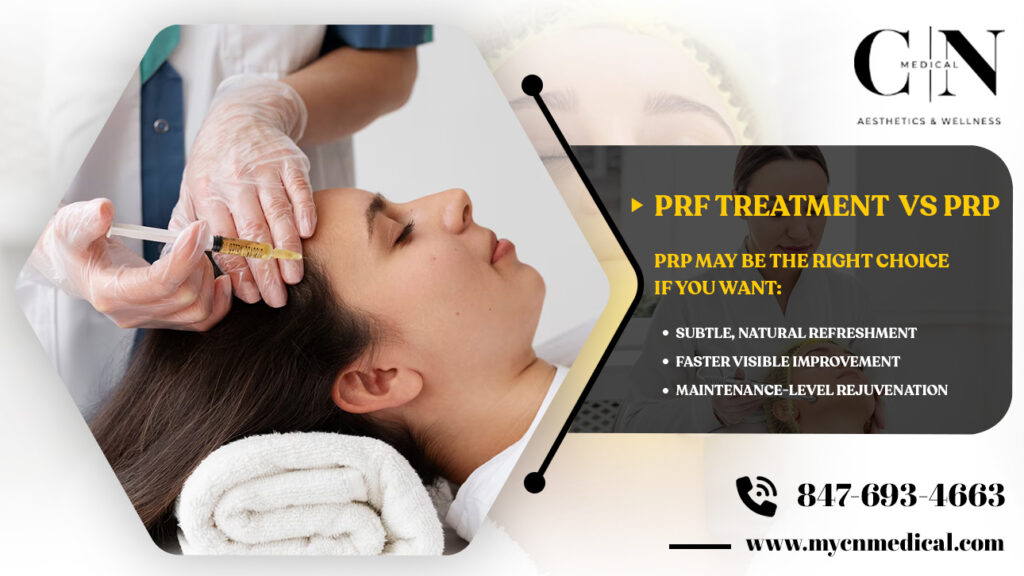
PRP may be the right choice if you want:
- Subtle, natural refreshment
- Faster visible improvement
- Maintenance-level rejuvenation
PRF may be the better option if you want:
- Longer-lasting regeneration
- Improvement in volume and skin quality
- Treatment for delicate or hollow areas
A professional evaluation ensures the treatment is tailored rather than generic.
What Results Should You Expect?
Both PRP and PRF require patience. These treatments do not deliver overnight transformation.
Most patients notice gradual improvements in:
- Skin texture
- Firmness
- Tone
- Overall skin health
Results typically continue to improve for several weeks as collagen production increases. PRF results often persist longer due to sustained growth factor release.
Also Check: Before and After: Real Stories of PRP Hair Restoration
Conclusion
When comparing PRF vs. PRP, the difference lies not just in how they are prepared, but in how they behave once inside the skin. PRP delivers a faster regenerative signal, while PRF provides a longer, more supportive healing response. Both treatments offer natural rejuvenation using your body’s own resources.
For individuals exploring regenerative facial treatments in the Park Ridge, Illinois area, personalized PRP and PRF options are available at CN Medical Aesthetics and Wellness, where treatment plans are designed around skin needs rather than trends.