
Semaglutide is often discussed when appetite feels difficult to control, and weight loss becomes inconsistent despite effort. Many people have already adjusted their diet, increased activity, and tried structured plans. When hunger still feels persistent, semaglutide may be introduced as a medical option to help regulate appetite more effectively.
Once treatment is considered, one of the first concerns is dosage. Questions usually focus on how much is injected, how often it is taken, and how quickly the dose increases. The reality is that semaglutide syringe dosage is intentionally gradual. It is not designed to be aggressive. It is designed to be tolerable and sustainable.
Understanding how dosing works helps prevent frustration and unrealistic expectations.
What Does Semaglutide Do?
Semaglutide mimics a hormone that helps regulate appetite and blood sugar. When administered weekly, it slows digestion and strengthens the signal of fullness after eating.
This does not mean hunger disappears. Instead, meals tend to feel more satisfying, portions naturally decrease, and cravings may feel less urgent. Over time, this supports more consistent calorie control without constant willpower.
The effect builds gradually, which is why dosing begins at a lower level.
How Semaglutide Syringe Dosage Is Structured
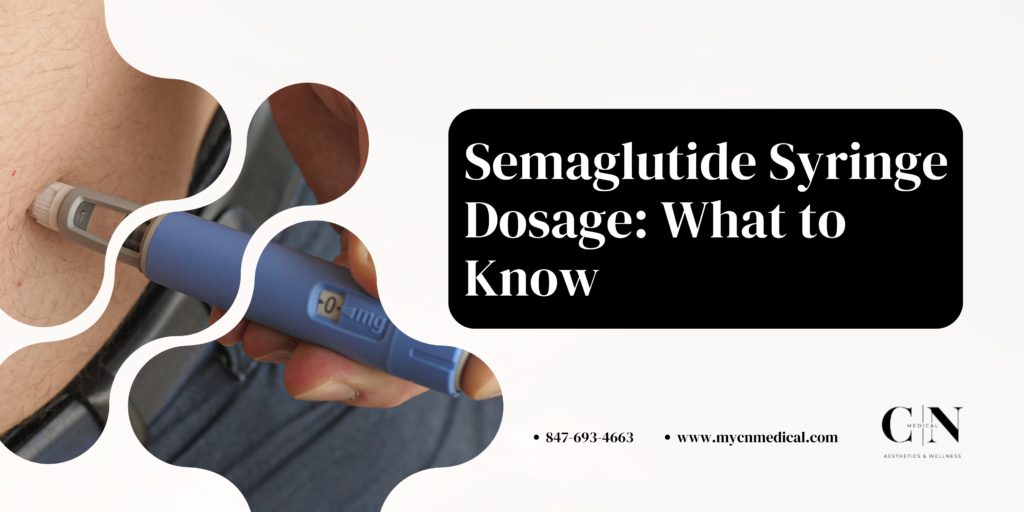
Semaglutide is typically administered once per week using a prefilled syringe or pen. The starting dose is intentionally low. This gives the digestive system time to adjust.
The dose is usually increased in stages. Each stage is maintained for several weeks before moving higher. This pause allows providers to evaluate:
- Appetite control
- Side effects
- Tolerance
- Early weight trends
If appetite feels stable and side effects are manageable, the dose may stay the same. If hunger returns quickly or progress stalls over time, an increase may be considered.
There is no advantage to rushing this process. Higher doses do not automatically mean better results.
When to Take Semaglutide
Semaglutide is taken once per week on the same day each week. The exact time of day is flexible, but consistency matters.
Some people prefer mornings to monitor how they feel during the day. Others choose evenings to sleep through mild side effects. What matters most is maintaining a predictable schedule.
If a dose is missed, instructions should follow medical guidance rather than doubling up.
Is Semaglutide Safe?
When prescribed and monitored appropriately, semaglutide is considered safe for many individuals. Safety depends on proper screening, medical history review, and gradual dose progression.
Regular follow-ups help monitor response and adjust the treatment plan when needed.
Semaglutide Side Effects and Tolerance
Most semaglutide side effects occur during dose increases rather than at steady levels. The most common issues are digestive.
Some individuals experience temporary nausea, mild stomach discomfort, or reduced appetite beyond expectation. These symptoms usually improve as the body adapts.
Increasing dosage too quickly often intensifies side effects without improving weight loss. This is why structured progression matters.
Semaglutide Rash and Injection Site Reactions
Occasionally, mild redness or irritation may appear at the injection site. A semaglutide rash is uncommon but possible.
Injection site reactions are typically mild and resolve within a short time. Rotating injection areas and using proper technique helps reduce irritation. Persistent or severe reactions should be evaluated.
How Providers Know the Dose Is Working
Effectiveness is not measured by how little someone eats in a single day. Instead, patterns over several weeks are reviewed.
A well-adjusted semaglutide dosage often leads to:
- Reduced food noise
- More manageable hunger
- Smaller portions without force
- Gradual, steady weight change
If hunger feels extreme or completely absent, the dose may need reassessment. Balance is the goal.
Where People Commonly Misunderstand Semaglutide Dosage
A common misconception is that increasing the dose quickly will speed up weight loss. In practice, this often leads to nausea and fatigue, which can disrupt hydration and protein intake.
Another misunderstanding is expecting constant weekly weight loss. Weight reduction with semaglutide tends to occur in phases. Plateaus can happen and do not always require dose changes.
The focus remains long-term metabolic regulation rather than rapid shifts.
Semaglutide vs Tirzepatide: What’s the Difference?
Semaglutide and tirzepatide are often compared because both support weight loss through hormone-based pathways. However, they are not identical.
Semaglutide primarily targets one hormone pathway involved in appetite regulation. Tirzepatide targets two pathways, which may influence both appetite and insulin response more strongly.
Because of this difference:
- Tirzepatide may produce stronger appetite suppression in some individuals.
- Side effects can feel more intense during dose increases.
- Dosing progression may be even more cautious.
Neither medication is automatically “better.” Selection depends on metabolic health, tolerance, and treatment goals. Some individuals respond well to semaglutide alone. Others may benefit from tirzepatide under supervision.
Both require gradual dosing and medical monitoring.
Long-Term Planning With Semaglutide
Semaglutide works best alongside balanced nutrition and consistent hydration. It supports appetite regulation, but it does not replace foundational habits.
In many cases, once appetite stabilizes, individuals remain on a steady dose rather than continuing to increase indefinitely. Escalation without clinical reason rarely improves outcomes.
Weight loss supported by semaglutide tends to be more sustainable when dosing is thoughtful rather than aggressive.
Conclusion
Semaglutide syringe dosage for weight loss is structured, gradual, and personalized. Starting low and increasing slowly helps reduce side effects while supporting steady appetite regulation. Understanding how dosing works, when to take semaglutide, and how it compares to tirzepatide helps create realistic expectations.
For individuals in the Park Ridge, Illinois area exploring semaglutide as part of a medical weight loss plan, CN Medical Aesthetics & Wellness provides guided treatment plans focused on safety and long-term results.
A consultation can help determine whether semaglutide or tirzepatide therapy is appropriate based on individual goals and response.