
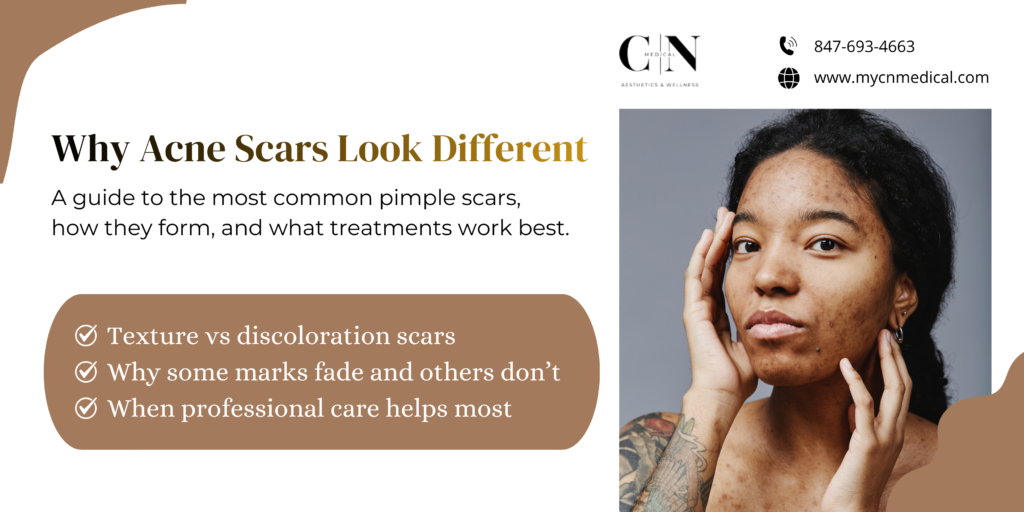
Acne often fades, but the marks it leaves behind can linger for months or even years. Many people assume all acne scars are the same, yet that is rarely the case. Pimples and scars vary widely in appearance, depth, and cause. Understanding the different types of acne scars is the first step toward choosing the right treatment and setting realistic expectations.
Some marks are temporary and fade on their own, while others require professional care. This guide explains the types of acne scars, how they form, and which treatment approaches are commonly recommended for each.
Why Acne Leaves Scars and Marks
Acne scars form when inflammation damages the skin’s deeper layers. When a pore becomes clogged and inflamed, the surrounding tissue can break down. As the skin heals, it may produce too much or too little collagen. This imbalance leads to visible changes in texture or color
Not all acne leaves scars. Mild pimples often heal without a trace. Scarring is more common with deeper, inflamed breakouts or when pimples are picked, squeezed, or left untreated.
Acne Scars vs Acne Marks: What Is the Different
Before reviewing acne scars types, it helps to understand the difference between scars and marks.
- Acne marks, also called post-acne marks, are flat discolorations left behind after a pimple heals. These include red or dark spots and usually fade over time.
- Acne scars involve a change in skin texture. They appear as indentations or raised areas and do not fade on their own.
Both concerns are common, but they are treated in different ways.
What are the Different Types of Acne Scars?
There are several types of scarring from acne. Each has a distinct appearance and cause.
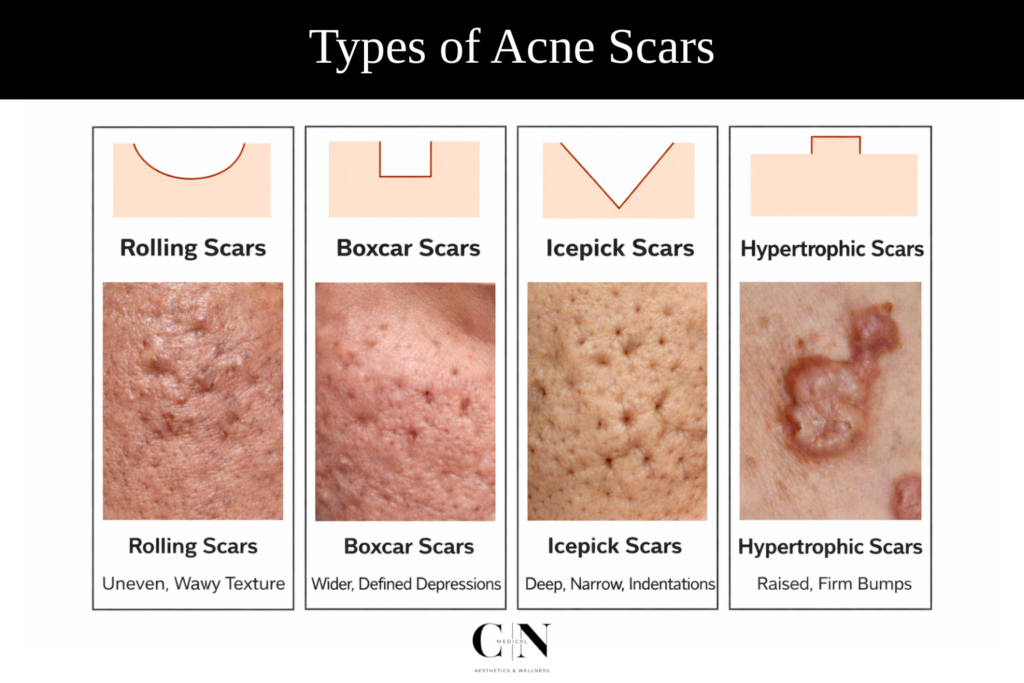
Ice Pick Scars
Ice pick scars are narrow, deep indentations that extend into the skin. They often look like small holes or punctures.
These scars form when deep acne damages the skin’s structure. Because of their depth, ice pick scars are among the most difficult to treat.
Common characteristics:
- Deep and narrow
- Sharp edges
- Often found on the cheeks
Boxcar Scars
Boxcar scars are wider depressions with well-defined edges. They can be shallow or deep and give the skin an uneven texture.
These scars are often caused by inflammatory acne that destroys collagen.
Common characteristics:
- Round or oval shape
- Clearly defined edges
- Shallow to deep indentations
Rolling Scars
Rolling scars create a wave-like or uneven appearance on the skin. They form when fibrous bands pull the skin downward.
These scars are common on the lower cheeks and jawline.
Common characteristics:
- Soft, sloping edges
- Uneven skin texture
- Visible under certain lighting
Hypertrophic and Keloid Scars
Unlike indented scars, these scars are raised above the skin’s surface. They occur when the body produces excess collagen during healing.
Hypertrophic scars stay within the original acne area, while keloid scars grow beyond it.
Common characteristics:
- Raised and firm
- More common on the chest, shoulders, and jawline
- Can be itchy or uncomfortable
Different Types of Pimple Scars Based on Color
Not all pimple scars affect texture. Many affect color instead.
Redness Scars From Acne
Red acne scars, also known as post-inflammatory erythema, appear as red or pink spots after acne heals. They are caused by dilated blood vessels near the skin’s surface.
These marks are common after inflammatory acne and are more noticeable on lighter skin tones.
Dark Spots and Brown Marks
Post-inflammatory hyperpigmentation appears as brown or dark spots. These marks are more common on medium to deeper skin tones.
While not true scars, these marks can last a long time without treatment.
How to Get Rid of Red Acne Scars and Marks?
Redness scars from acne often fade gradually, but treatment can speed up the process.
Common approaches include:
- Gentle skincare that supports skin healing
- Sun protection to prevent marks from darkening
- Treatments that target redness and inflammation
Consistency is key. Without proper care, red marks may take longer to resolve.
Acne Marks Treatment vs Acne Scars Treatment: What Actually Works
Not all post-acne concerns respond to the same treatment. One of the most common mistakes is using scar treatments for marks or expecting topical products to fix deep scarring. The approach depends on whether the concern is color-related or texture-related.
Post Acne Marks Treatment (Redness and Dark Spots)
Post-acne marks are flat and sit on the surface of the skin. These include red marks left after pimples heal and darker spots caused by excess pigment. Because the skin texture remains smooth, treatment focuses on improving tone and speeding up skin renewal.
Common post-acne marks treatment options include:
- Chemical peels to exfoliate pigmented skin cells and brighten tone
- Medical-grade facials that support skin renewal and hydration
- Topical treatments designed to reduce redness and discoloration
- Laser or light-based treatments that target redness and pigment
- Consistent sun protection, which is essential to prevent marks from darkening
These treatments are generally less invasive and involve little to no downtime. With consistency, post-acne marks often fade significantly over time.
Acne Scars Treatment (Textural Scarring)
Acne scars affect the skin’s structure. These include ice pick scars, boxcar scars, and rolling scars. Because these scars involve collagen loss or tissue tethering, treatment must work deeper within the skin.
Acne scars treatment commonly includes:
- Microneedling to stimulate collagen production and improve texture
- RF microneedling for deeper collagen remodeling
- Subcision, which releases fibrous bands pulling the skin downward
- Laser skin resurfacing to smooth uneven texture and stimulate healing
- PRP or PRF treatments to support tissue regeneration and collagen repair
These treatments often require multiple sessions and gradual improvement. Results build over time as the skin produces new collagen.
Why the Right Treatment Matters
Using surface treatments for deep scars can lead to frustration and limited results. At the same time, aggressive treatments are not necessary for simple discoloration.
Identifying whether the concern is a mark or a scar allows for:
- Better treatment planning
- Safer procedures
- More realistic expectations
- Improved long-term outcomes
Many individuals have a combination of both, which is why treatment plans are often customized and layered.
Why Identifying Acne Scar Types Matters
Using the wrong treatment for the wrong scar type can lead to poor results or wasted time. For example, topical products may help acne marks but will not fix deep scars.
Understanding the type of pimple scars present allows for:
- Better treatment planning
- More realistic expectations
- Improved long-term results
Many individuals have more than one type of acne scar, which is why combination treatment plans are often recommended.
When to Seek Professional Guidance
If acne scars or marks affect confidence or do not improve over time, professional guidance can help. A consultation allows the skin to be assessed and the scar types identified correctly.
Treatment plans are typically customized based on scar type, skin tone, and lifestyle factors.
Conclusion
Acne scars are not one-size-fits-all. From deep ice pick scars to redness scars from acne, each type requires a different approach. Understanding the different types of pimple scars makes it easier to choose treatments that actually work.
For individuals in the Park Ridge, IL area seeking acne marks treatment or solutions for acne scars, CN Medical Aesthetics & Wellness offers customized care plans designed to improve skin texture and tone safely and effectively.